June 12, 2026


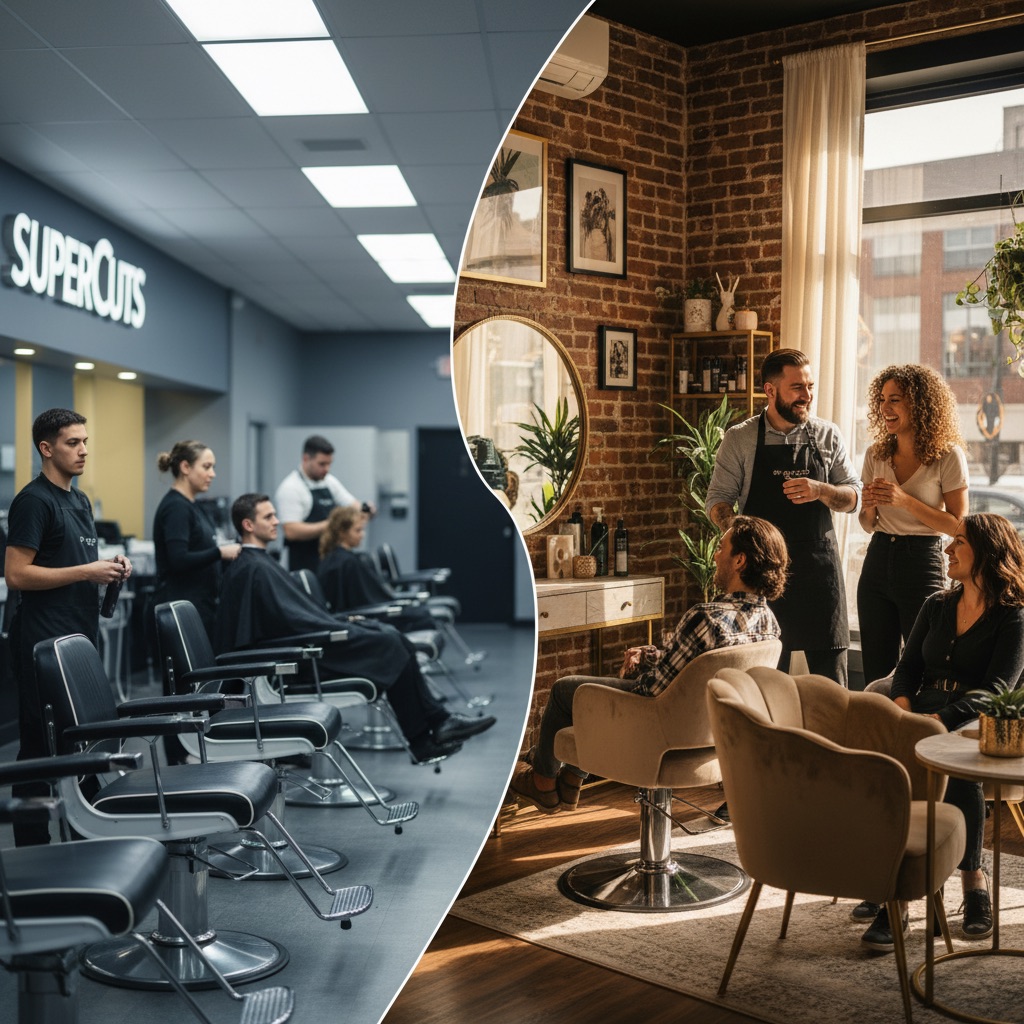
If you walk into any suburban shopping center or downtown strip, you’ll likely see them: large, brightly lit chain salons with rows of identical chairs and a spinning “walk-ins welcome” sign. For decades, these establishments were the “safe” career path for newly licensed hair stylists and barbers. They provided a steady flow of clients, a paycheck (even if it was commission-based), and a place to learn the ropes.
But lately, the “No Vacancy” signs are moving elsewhere.
A massive shift is happening in the beauty industry. Stylists and barbers are hanging up their corporate aprons and moving into salon suites—miniature, private boutiques housed within a larger building. It’s the “Great Resignation” of the beauty world, and it’s changing the way we get our hair done.
Why is everyone making the jump? Let’s dive into why the “suite life” is winning.
Before we get into the why, let’s look at the what. A salon suite is essentially a private, lockable room within a larger facility. Think of it like a luxury office building, but instead of accountants and lawyers, every door opens to a mini hair salon, barbershop, or nail studio.
The building owner provides the infrastructure (utilities, Wi-Fi, often a styling chair and sink), and the professional brings their talent, tools, and brand. It’s the middle ground between being an employee and opening a massive, high-overhead storefront.
The biggest driver behind this migration is, unsurprisingly, money.
In a traditional chain salon, most stylists work on a commission split. This often means the salon takes 50% or more of every haircut, color, and treatment. If a stylist brings in $3,000 a week, they might only see $1,500 of that—and that’s before taxes.
In a salon suite, you pay a flat weekly rent. Whether you make $1,000 or $5,000 that week, your “overhead” stays the same. For a busy stylist with a loyal following, this often results in an immediate and significant “pay raise.” Additionally, suite owners keep 100% of their retail profits. Instead of pushing a corporate-mandated shampoo for a tiny 10% commission, they buy what they love and keep the full markup.
Chain salons are built on consistency, which is great for the brand but often stifling for the artist. You have to wear the uniform, use the corporate-approved color line, and play the corporate-approved “Top 40” radio station.
Moving to a suite is like getting a blank canvas. Want to paint your walls emerald green? Do it. Want to play lo-fi hip hop and offer your clients espresso? Go for it. This autonomy allows stylists to build a brand that reflects who they actually are. It’s not just about “doing hair” anymore; it’s about creating an aesthetic and a culture that attracts their ideal “tribe” of clients.
Burnout is a major issue in the beauty industry. At a chain, you’re often required to work specific shifts, including late nights and every single weekend. Taking a Saturday off for a family wedding can feel like pulling teeth.
In a suite, the stylist is the CEO. If they want to work four ten-hour days and have a three-day weekend every week, they can. If they need to drop their kids at school and start their first appointment at 10:00 AM, there’s no manager to tell them no. This flexibility is a game-changer for parents and those looking to prioritize mental health.
From the client’s perspective, the chain salon can be… loud. Between the blow dryers, the ringing phones, and the chatter from ten other stations, it’s rarely a relaxing experience.
The salon suite offers total privacy. For the client, it’s a one-on-one VIP experience. They can talk freely about hair loss, personal issues, or just enjoy the silence without feeling like they’re on a conveyor belt. In a post-pandemic world, many clients also prefer the safety of a private room over a crowded, communal space.
Opening a traditional brick-and-mortar salon is a massive financial risk. You’re looking at hundreds of thousands of dollars in build-out costs, permits, and long-term commercial leases.
A salon suite is “Salon Ownership Lite.” It allows a barber or stylist to dip their toes into entrepreneurship with very little upfront capital. Most suites are “turnkey,” meaning you can sign a lease on Monday and be cutting hair on Tuesday. It’s the perfect stepping stone for the ambitious professional.
Initially, your “fixed” costs are higher because you must pay rent even if you don’t have a client. However, because you keep 100% of your service and retail income, most established stylists find they take home significantly more money in a suite than they did on a commission split.
Yes. Even though you are inside a larger building, you are an independent business owner. You will typically need a state-issued professional license, a local business license, and liability insurance.
Unlike chains, suites don’t usually get “walk-in” traffic. Success in a suite depends on social media marketing (Instagram/TikTok) and client retention. Most professionals don’t move into a suite until they have a solid “book” of loyal clients who will follow them to the new location.
While every location varies, most include water, electricity, Wi-Fi, a styling chair, a shampoo bowl, and basic cabinetry. Some luxury suites even offer laundry facilities and breakrooms.
The move away from big-box salons isn’t just a trend; it’s a fundamental shift in how beauty professionals view their value. By choosing suites, stylists and barbers are reclaiming their time, their income, and their creative voices. While the responsibility of running a business can be daunting, for most, the trade-off—freedom—is more than worth it.
Whether you’re a stylist looking to make the jump or a client looking for a more personal touch, it’s clear: the “suite life” is the future of the industry.

Book your appointment today!